
01 / 03
Distributed networks
Transceiver and repeater Agents are envisioned to connect across multiple pathways, supporting information flow when conventional routes are disrupted.
Explore technology ↗Developing a more connected, resilient future through distributed communications, intelligent infrastructure, and technology built with purpose.
T.L. Tedford Enterprises, Inc. is an American technology enterprise working to improve safety, resilient communications, situational awareness, and emergency response across defense and civilian environments.
Through TL Tech Technologies and Research, we are developing an approach to connectivity designed to complement existing systems and help critical information find a path forward.
Our mission →Founded in 2011 and based in Aurora, Texas, TLTE is guided by a vision of improving safety and the flow of information across connected systems. Its work draws on vehicle alert and information-sharing concepts.
TLTE is exploring how those ideas can inform broader applications in communications resilience, mobility, situational awareness, and emergency response.
U.S. Patent No. 12,142,143 B1, Vehicle alert system and method of use, was issued November 12, 2024. It describes a vehicle alert system incorporating positioning, sensors, and device-to-device communication. Its scope is governed by its claims; it does not establish the performance of the proposed Global Mesh.
VIEW THE PATENT RECORD ↗Our portfolio brings together communications, positioning, and safety concepts to address complex challenges across domains.
Transceiver and repeater Agents are envisioned to connect across multiple pathways, supporting information flow when conventional routes are disrupted.
Explore technology ↗Concepts for sharing position, timing, status, and confidence information to support navigation and situational awareness.
Explore technology ↗Predictive hazard awareness and connected systems designed with potential applications in vehicles, public safety, and emergency response.
Explore technology ↗Our proposed distributed network architecture is intended to move authorized information between participating Agents, with multiple routes helping the network adapt when individual paths are unavailable.
We are seeking engineering and research partners to build, test, and independently measure the architecture—starting with small, controlled networks.
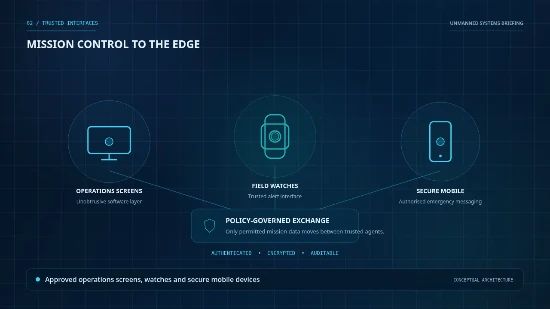 Mission control to the edge / Conceptual architecture
We believe meaningful innovation begins with a human need. Our long-term ambition is to help people and organizations communicate, navigate, and respond more effectively when it matters most.
We welcome collaboration with government, industry, research, and humanitarian organizations to turn promising ideas into measurable, mission-relevant capabilities.
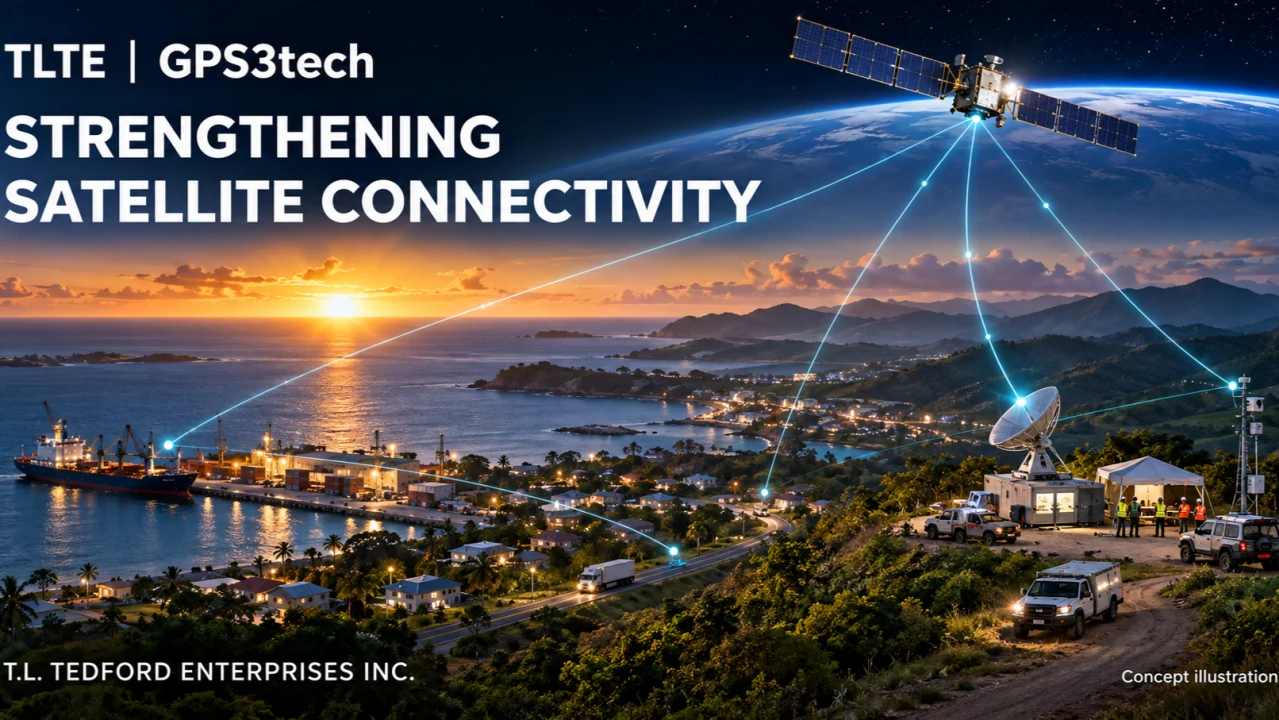
When communications fail, a rescue team can lose contact, a vehicle can lose access to useful information, and a remote community can become harder to reach. Expanding satellite connectivity creates an opportunity to address these problems. Its value grows when the people and systems below it can exchange information reliably.
At T.L. TEDFORD ENTERPRISES INC. (TLTE), our aim is to strengthen that connection. GPS3tech and the Tedford Global Mesh propose a distributed network of intelligent Agents that can bring together communications, sensing and positioning information. We want to help essential information reach the people who need it, including when individual connections become unreliable.
Our development approach is to combine the reach of satellite services with useful local cooperation between connected devices. The improvements described here are the goals of that integration programme, to be demonstrated through engineering and controlled trials.
TLTE brings an existing invention and prototype to this discussion. Terry Tedford is the inventor named on U.S. Patent No. 12,142,143 B1, Vehicle alert system and method of use, granted on 12 November 2024. It describes connected vehicle alert devices, sensor information sharing and provisions for communicating wearable sensor information to medical personnel. [1]
Our media package identifies a prototype available for technical discussion. We are seeking engineering support to modernise this foundation and evaluate the broader Agent architecture. That work connects our original focus on shared information and safety with applications across transport, emergency response and communications infrastructure. [2]
A practical starting point is a local Agent network connected to a compatible satellite terminal through a gateway. Authorised devices could exchange information locally, while the gateway provides a route to remote teams and wider services. This could help connect sensors, vehicles and infrastructure around a shared satellite connection.
For a remote settlement, the proposed benefit is a network that can carry local safety alerts and infrastructure reports while using satellite connectivity for communication beyond the settlement. For a port or emergency site, it could connect observations from several locations with the teams responsible for responding.
This direction has a clear industry context. ESA has described NOMADLINK, a UK project combining satellite, cellular and Wi-Fi connectivity for emergency response and remote communities. TLTE would need to demonstrate the additional value its own Agents bring, including how they integrate with existing equipment. [3]
TLTE’s proposed mesh gives neighbouring Agents a role in sharing information and finding available routes. If a node or connection fails, the design objective is to use another usable path where one exists. This could reduce interruptions to essential messages and preserve useful local coordination. [2, 4]
Consider a flood response. A proposed deployment could link rescue vehicles, field sensors and a coordination point. If the satellite connection becomes unavailable, a functioning local mesh could still carry messages within its connected area. Remote delivery would resume when an authorised external route became available. Local continuity and access to the wider internet are separate capabilities, and both need to be measured.
Local processing also offers a way to make limited connections more useful. An Agent could identify relevant events and send concise updates, with more detailed information available when required. A trial should establish whether this reduces unnecessary traffic while preserving the information responders need.
These benefits depend on working radios, sufficient power, appropriate node placement and secure routing. The purpose of a demonstration is to establish the conditions under which the network adds resilience and how it behaves when those conditions change.
Our broader ambition is to connect communications with useful awareness of what is happening nearby. A report from an authorised sensor, a vehicle’s status and a location update could be shared with the relevant users, helping them form a more coherent picture of an incident.
TLTE’s technical presentation proposes combining satellite positioning, terrestrial references, platform sensors and information from neighbouring Agents. Satellite internet and GPS positioning perform different functions. Keeping messages moving does not, by itself, establish accurate navigation when GPS is unavailable. Positioning accuracy, timing and confidence in the information must be evaluated separately. [4]
For emergency services, the proposed contribution is earlier access to relevant alerts, asset locations and incident information. For maritime, aviation and transport operators, it is improved coordination between compatible onboard and external systems. Each application requires suitable interfaces, access controls and its own safety assessment.
The UK, United States and NATO partners also have reasons to evaluate resilient information sharing for logistics, infrastructure protection and operational awareness. TLTE welcomes technical assessment against their requirements. Any operational use would follow the necessary testing and approvals.
The next step should be a focused integration trial with a defined operational problem. A small Agent network and a compatible satellite gateway can provide a starting point for comparing performance with and without the proposed TLTE functions.
That comparison should measure message delivery, delay, recovery after a connection fails, power consumption and compatibility with existing systems. Security testing should establish who can join the network and how false or unauthorised information is handled. A positioning trial should separately measure accuracy and the system’s ability to identify unreliable inputs.
Successful results would give operators evidence for deciding where TLTE adds value and what should be developed next. They would also give engineering and investment partners a clearer basis for supporting modernisation and deployment.
We invite satellite operators, communications engineers, universities and public-safety organisations to work with Terry Tedford and Mike Motrici on that evaluation. Bring a real operational problem, agree the measures of success and examine what the technology can contribute.
Our goal is practical: use TLTE technology to help people stay informed, connected and able to respond when reliable information matters most.
Reference numbers are retained from the supplied description; the corresponding source list has not yet been provided.

A collection of visual concepts for connected infrastructure, mobility, and resilient communications.
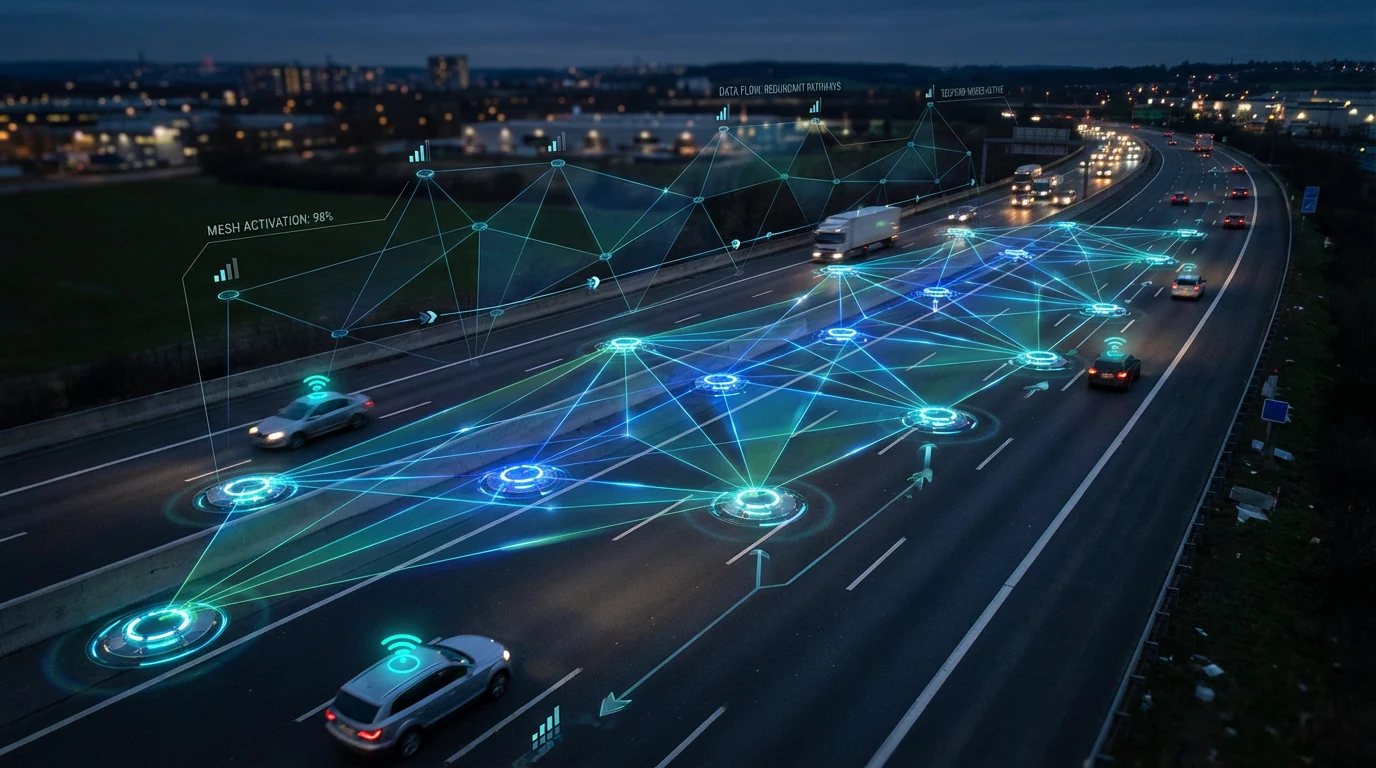

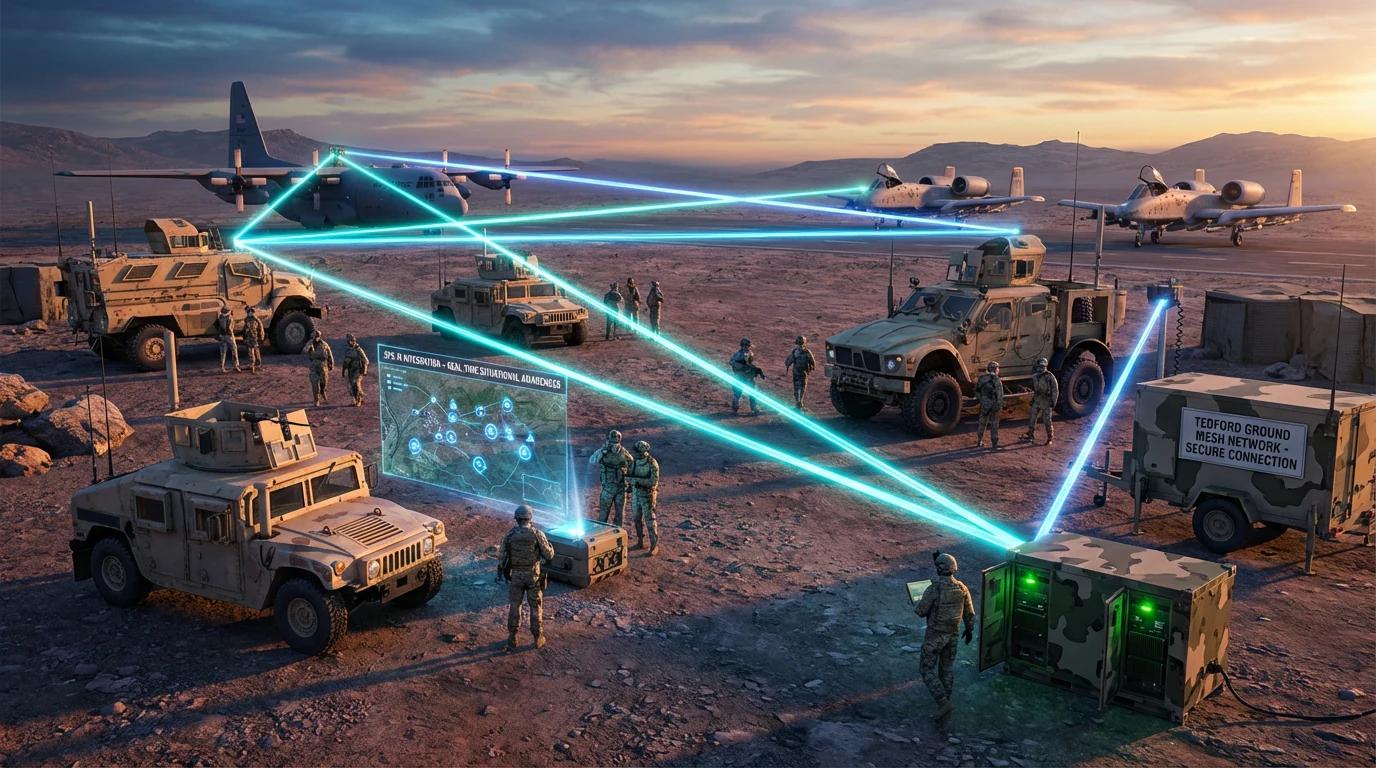
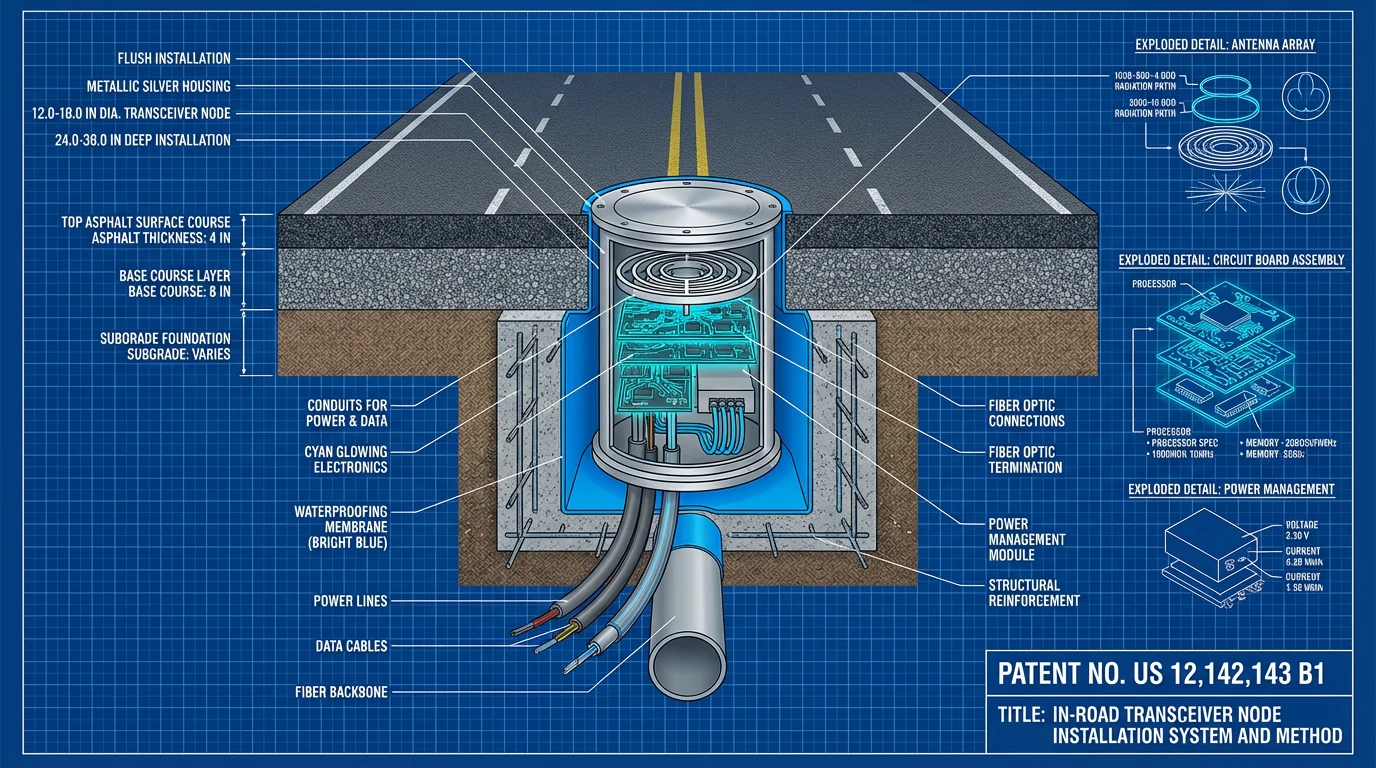
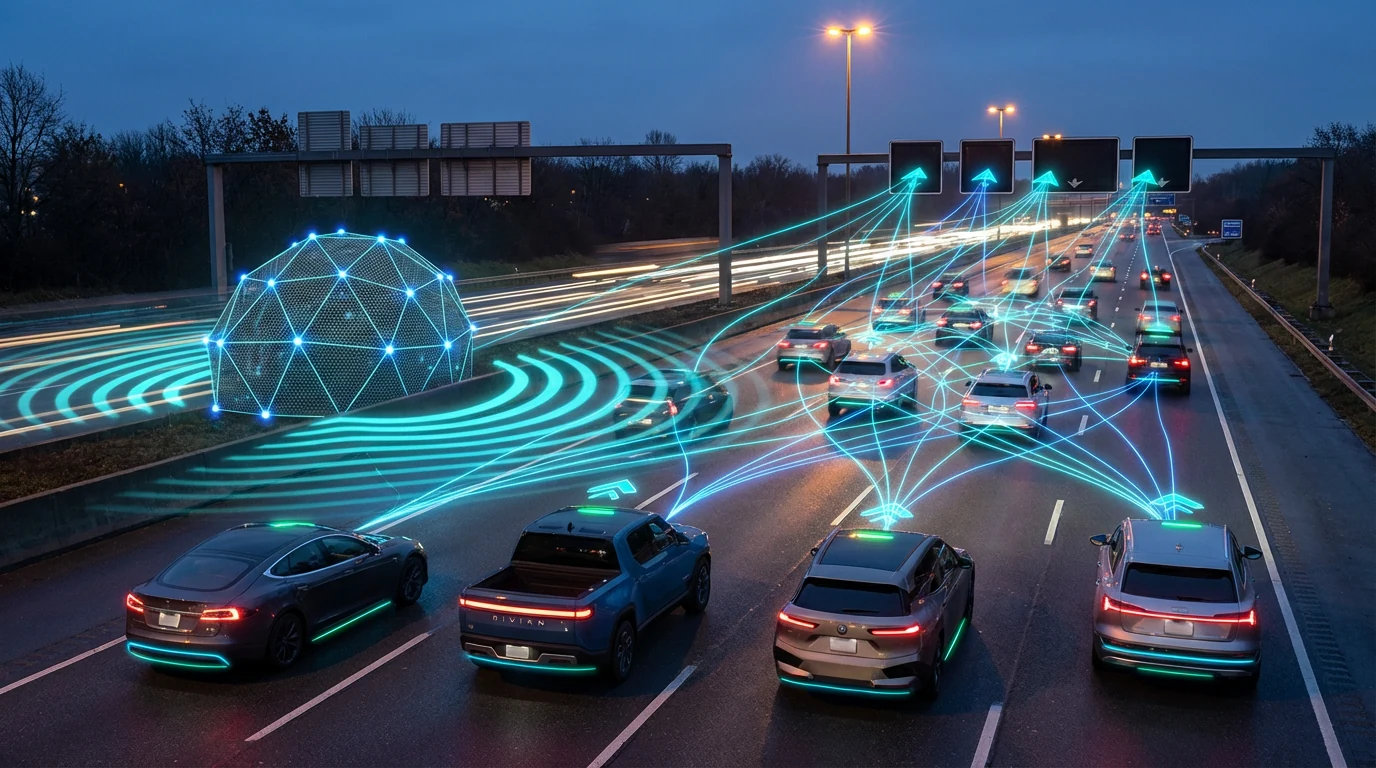
Concept images are illustrative and do not establish completed deployments, verified performance, or operational readiness. Values and labels shown within the illustrations should not be treated as measured results.